
If your uPVC door won't lock, you're not alone — it's one of the most common call-outs our South London locksmiths attend every week. uPVC doors use a complex multipoint locking system, and when any part of that system fails, the whole door can become impossible to secure. In this guide, our team breaks down the five most common faults, what causes them, and when you need a professional for uPVC door repair in South London.
1. The Number One Reason a uPVC Door Won't Lock
Before we get into the individual faults, it helps to understand how a uPVC door locks. Unlike a traditional mortice lock, uPVC doors use a multipoint locking mechanism — a single gearbox that, when you lift the handle, simultaneously shoots multiple locking points (hooks, deadbolts, rollers) into the frame. This system gives excellent security when it works, but it means a single failing part can prevent the entire door from locking.
The handle, the gearbox, the spindle, the hinges, and the frame alignment all need to work together. When one goes wrong, the door either won't lock at all, or it will lock partially — leaving gaps that compromise your home's security. If your uPVC door won't lock, don't force it: forcing a stiff mechanism accelerates wear and can cause a complete failure.
2. Gearbox Failure: The Most Common uPVC Door Fault
The gearbox (sometimes called the lock case or mechanism) is the heart of a uPVC door. It contains the cams, hooks, and rollers that engage the frame when you lift the handle and turn the key. Gearboxes typically last 10–15 years with normal use, but heavily used doors — front doors especially — can see them fail sooner.
Signs your gearbox has failed:
- ✓ The handle lifts but the door still pulls open
- ✓ You can hear a click or feel the key turn, but the bolt doesn't engage
- ✓ The handle feels loose or offers no resistance when lifted
- ✓ The door only locks at one point (usually the latch) rather than multiple points
What to do: Gearbox replacement is a straightforward job for a qualified locksmith. We carry the most common Fullex, Mila, Winkhaus, and Yale gearboxes, so most repairs are completed in under an hour. Do not attempt to lubricate and force a seized gearbox — this can break internal components and make replacement harder. Contact our team for a uPVC door repair in South London.
3. Handle and Spindle Problems
The door handle spindle — the square steel bar that passes through the gearbox — connects the handle to the locking mechanism. Over time, the spindle wears down, particularly at the corners, and it can no longer turn the gearbox cams with enough force to engage the locks.
Signs of a worn spindle or handle:
- ✓ Handle droops or drops when released
- ✓ Handle feels sloppy or has excess play before it engages
- ✓ You need to lift and jiggle the handle to get the lock to engage
A dropped handle is often an early warning of a gearbox on its way out — the gearbox spring has weakened and can no longer hold the handle in the up position. Replacing just the handle may resolve it temporarily, but a lock change or mechanism inspection is usually worth doing at the same time.
4. Door Misalignment and Dropping Hinges
uPVC doors are heavy — often 30–50kg — and the hinges carry that weight every time the door is opened and closed. Over the years, hinges can loosen, sag, or crack, causing the door to drop out of alignment with the frame. When this happens, the locking points no longer line up with the keep plates (the metal receivers in the frame), so hooks and bolts can't engage properly.
Signs of a misaligned or dropped door:
- ✓ You have to lift the door slightly to lock it
- ✓ Visible gap at the top or bottom of the door when closed
- ✓ The door drags on the floor when opening or closing
- ✓ Draughts around the door edge that weren't there before
Most uPVC door hinges are adjustable — a specialist can realign the door in all three axes (up/down, in/out, side to side) using the adjustment screws built into the hinge. This is a quick, inexpensive fix when caught early. If the hinges are cracked or broken, they'll need replacing — still a minor repair compared to a new door.
5. Partial Catch: When the Door Locks in One Place But Not Others
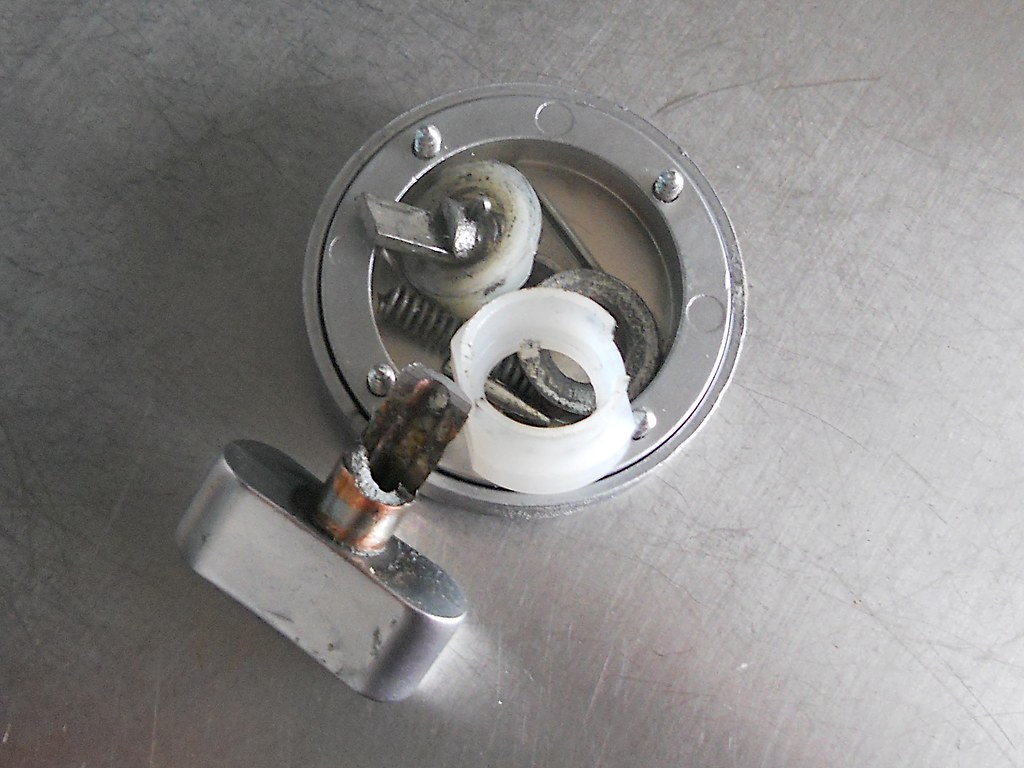
A multipoint uPVC lock has between 3 and 6 locking points along the edge of the door. When the gearbox starts to fail internally, it often loses the ability to drive some points while still engaging others. The result: your door feels locked — the key turns and the latch holds — but one or more of the hooks, rollers, or deadbolts are not engaging the keep.
This is a security risk that can go unnoticed. The door feels shut, but a determined intruder can flex the frame at the unengaged points and force entry without defeating the lock. If you notice that your door is secure at the top but not the bottom (or vice versa), or that the deadbolt throws but the hooks don't, have the gearbox inspected promptly.
Some multipoint locks have adjustable keeps — small adjustments to the keep plate position can sometimes restore engagement when the door is only slightly out of alignment. A locksmith will check whether adjustment is sufficient or whether the gearbox needs full replacement.
6. DIY Fixes vs When to Call a Locksmith
Not every uPVC door problem needs a professional. Here's a clear breakdown:
| Problem | DIY possible? | Recommendation |
|---|---|---|
| Stiff lock — needs lubrication | Yes | Use PTFE (dry) lubricant spray on the lock and hinges. Never use WD-40 on lock mechanisms. |
| Loose handle screws | Yes | Tighten the handle screws — usually a Torx T20 or T25 bit. |
| Handle replacement (like-for-like) | Possibly | Measure spindle length carefully. If the gearbox spring is also weak, handle swap alone won't fix it. |
| Hinge adjustment | Possibly | Use the hinge adjustment screws if accessible. Easy to strip — call a locksmith if unsure. |
| Gearbox replacement | No | Requires exact case measurement and fitting. Wrong gearbox = permanent damage. Call a qualified locksmith. |
| Locked out / door won't open | No | Call an emergency locksmith — non-destructive entry possible in most cases. |