
BS3621
British Standard — timber
Does the lock body resist picking, drilling and prising?Key-operated both sides, 5-lever minimum, 3-minute attack test.
BSI Kitemark
UK lock grades explained — BS3621, BS8621, TS007 3-star, Sold Secure Diamond, EN1303, PAS24 and Secured by Design. Every UK lock grade a homeowner or landlord actually needs to know, translated out of the technical jargon and into something you can act on before you buy.
Jump to the grade you need. Each chapter covers what it tests, who requires it, how to spot it on a lock, and which brands carry it.
A lock without a grade is a claim waiting to be refused. Every major UK home insurer now names a specific standard in the security clause of their policy. Miss the standard and a burglary claim can be reduced or denied outright, however much you paid for the lock.
Grades exist because "this lock is secure" stopped being a useful statement roughly forty years ago. As forced-entry techniques evolved — snapping, bumping, picking, drilling, kicking — the industry needed a shared yardstick so an insurer in Bristol and a locksmith in Bromley could agree on whether a specific lock was fit for purpose. The British Standards Institution (the people who stamp the Kitemark) wrote the first one in 1980, and the system has been expanded, cross-referenced and argued over ever since.
You'll meet seven different grading families in this guide. That sounds overwhelming but they mostly answer a different question: does the lock resist attack (BS3621, TS007, Sold Secure)? Does it exit safely in a fire (BS8621)? Does the whole doorset survive a rugby kick (PAS24)? Is the key genuinely hard to copy (EN1303)? Once you understand which question each grade answers, choosing a lock becomes a three-minute job instead of a Saturday afternoon.
If you're early in the decision and haven't picked a door type yet, read our how to choose a door lock guide first. For full ranked brand picks, see the best door locks UK comparison, and to talk through your specific policy wording, our South London engineers offer a free security audit — send us a photo and a mention of your insurer. We've been grading and fitting UK locks since 2015.
Each grading family answers a different question. This is the overview — the deep dives follow from Chapter 3 onward.
British Standard — timber
Does the lock body resist picking, drilling and prising?Key-operated both sides, 5-lever minimum, 3-minute attack test.
British Standard — escape
Can someone inside exit without a key during a fire?Handle-operated internally, key-operated externally.
Kitemark stars — 1–3★
Does the euro cylinder resist snap, drill, pick, bump?1-3 stars applied to cylinder and/or handle furniture.
Sold Secure — Diamond
Does the product survive extended specialist-tool attack?Bronze/Silver/Gold/Diamond tiers, independent UK testing body.
European cylinder — 8-digit
How hard is the key to copy? How long does the cylinder last?Key security 1–6, attack 0–2, durability, fire.
Publicly Available Spec
Does the entire door assembly resist attack, not just the lock?3-minute combined attack + forced entry tests.
Secured by Design
Has UK police design-out-crime team approved this product?Overlay badge on products that already meet above.
European padlock
How much abuse can the padlock body take?Corrosion, temperature and attack grades 1–6.

BS3621 is British Standard 3621, issued in 1980 and revised multiple times (currently BS3621:2007 + A2:2012). It is the UK's thief-resistant lock standard for timber final exit doors, and despite its age it's still the first standard most home insurers mention in the security clause of your policy.
It covers a narrow but important question: does the lock body itself resist a determined manual attack, with hand tools, for a defined period? The testing regime puts the lock through picking, drilling, sawing, prising and bumping attempts by two accredited testers inside a laboratory setting.
Almost every UK home insurer requires BS3621 (or a Kitemarked equivalent) on "final exit doors" — the front door, any back door, and any door from an attached garage. If your policy document mentions "British Standard" or "5-lever deadlock" in the security clause, this is what it's referring to. Brands commonly specified: Union 2134E, Chubb 3G114, ERA Fortress, Yale PM552. Full brand breakdown on our 5-lever mortice page.
Two lesser-known members of the BS family cover scenarios where the basic "key both sides" rule of BS3621 becomes a problem.
BS8621 is the thief-resistant plus escape cousin of BS3621. It meets the same external attack criteria but swaps the internal keyhole for a handle that always operates from inside.
This is essential in any property where a key might not be immediately available during a fire:
BS10621 extends BS3621 with a user-controlled internal lock override. When engaged, the door cannot be opened from the inside even with a key — blocking a burglar who has entered from making an exit with your goods, and stopping "bump and drag" raids in flats.
This trade-off has real fire-safety implications and isn't for every home:
BS3621 doesn't work on a uPVC door because there's no mortice pocket. TS007 (Technical Specification 007) was introduced in 2011 specifically to certify euro cylinders against the snapping epidemic. It's a Kitemarked star rating applied to two separate components — the cylinder and the handle/escutcheon — and it adds up.
Entry-level certified cylinder. Needs a 2-star handle over it to reach insurer-acceptable protection. Alone, only suitable for internal or low-risk doors.
Applied only to handles, escutcheons and furniture. Stops the cylinder being pulled, bored or levered externally. Pairs with a 1-star cylinder.
Stands alone — no supplementary handle needed. Passes snap, drill, pick and bump tests. The insurance benchmark for uPVC and composite doors.
3-star cylinder alone OR 1-star cylinder + 2-star handle = 3-star equivalent
Both reach the same tested tier. The second option is cheaper on paper but requires both components from compatible brands — easier to get wrong in DIY fitting. See our full anti-snap guide for brand-by-brand TS007 ratings.
Sold Secure is an independent UK testing body. It sits independently of BSI and the DHF/GGF consortium behind TS007, and deliberately tests products against the real tools found on UK burglars — not a sanitised laboratory toolkit. Our team is DBS-checked, our stock meets BS3621, and we are fully insured on every install.
Its door-cylinder standard is SS312 Diamond (often just called "Sold Secure Diamond"). Products are awarded one of four tiers:
Most UK insurers accept Sold Secure Diamond as equivalent to a TS007 3-star cylinder on uPVC and composite doors. Premium cylinders like the Ultion WXM and Avocet ABS Quantum carry both marks. Sold Secure also grades padlocks, chains, safes and bike locks, so you'll see the shield logo well beyond front-door cylinders — it's the same tier system across the board.
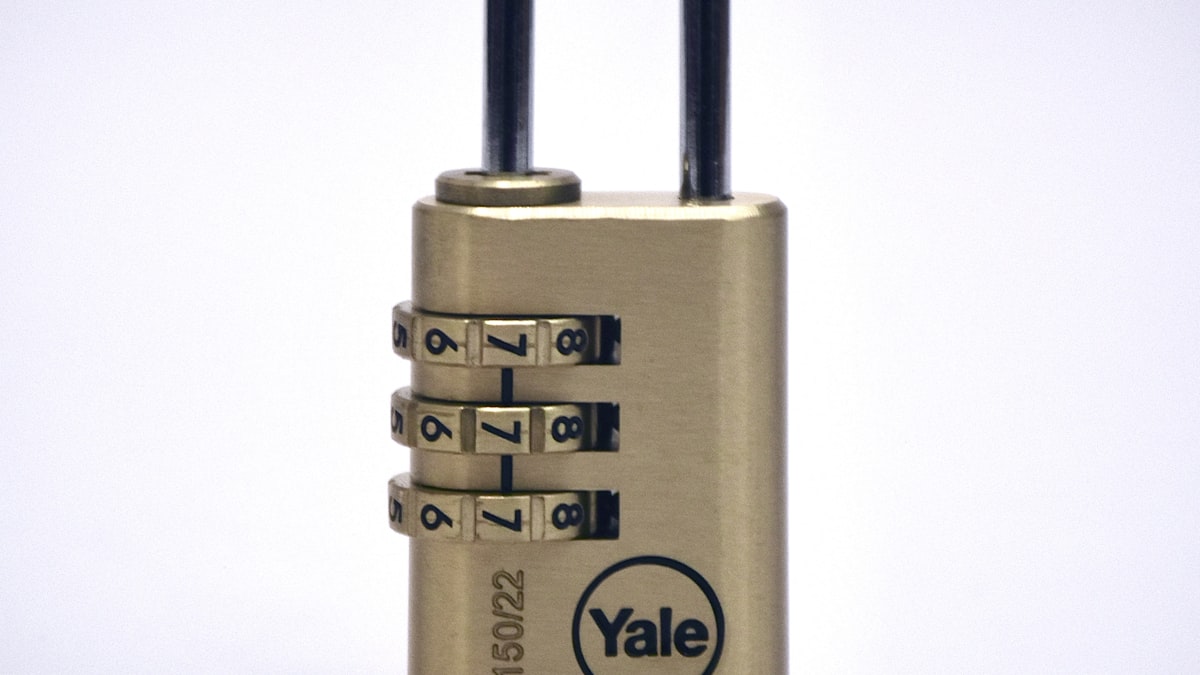
Flip a decent euro cylinder over and you'll often see a string of digits. That's EN1303, and each digit tells you something specific about how the cylinder performs.
Category of use — 1 = domestic, 2 = light commercial, up to 4 for heavy commercial. Higher = more daily cycles tested.
Durability cycles — 6 = 100,000 cycles. That's 15+ years of daily use.
Door mass — usually 0 (not applicable) for cylinders; applies to the mortice case on mortice locks.
Fire rating — 0 = not tested, 1 = suitable for fire doors.
Safety — 0 usually, irrelevant for cylinders.
Corrosion & temperature — A/B/C/D grades, B is standard.
Key security — the most important digit. Scale 1–6. A modern patented cylinder is 5 or 6.
Attack resistance — 0 = not tested, 1 = basic, 2 = enhanced. Digit-2 cylinders resist drill, pick and bump attacks.
The previous grades test components. PAS24 tests the whole doorset. Secured by Design is a police overlay badge for products that already meet one of the above.
PAS24 is BSI's specification for enhanced security doorsets — door, frame, hinges, lock and glass as one tested assembly. Mandatory in most new-build planning and on many Housing Association schemes.
Tests include manual attack tools, cylinder snapping, and a 3-minute forced-entry window.
Secured by Design (SBD) is run by National Police Chiefs' Council and awards a badge to products that already carry TS007, BS3621 or equivalent. It's an overlay — confirmation that the police crime-prevention team has reviewed and approved the product.
Often influences housebuilder specifications and some HOA schemes.
Use this single table as your reference. It shows each grade's applicability, insurer acceptance and real-world equivalent at a glance.
| Grade | Applies to | Tests for | Insurer accepts | Equivalent |
|---|---|---|---|---|
| BS3621 | Timber | Manual attack, picking, drilling | Yes — industry default | — baseline |
| BS8621 | Timber, HMO | BS3621 + internal handle escape | Yes — HMO & flat required | BS3621 + escape |
| BS10621 | Timber, high-risk | BS3621 + internal lockout | Yes — premium schedules | BS3621 + containment |
| TS007 1★ | uPVC cylinder | Basic cylinder attack | Only with 2★ handle | Sold Secure Bronze |
| TS007 2★ | Handle / escutcheon | Pull, bore, lever protection | Only paired with 1★ cylinder | Sold Secure Silver (furniture) |
| TS007 3★ | uPVC / composite | Snap, drill, pick, bump | Yes — standalone | Sold Secure Diamond |
| SS312 Diamond | Cylinder | Specialist-tool attack | Yes — TS007 3★ equivalent | TS007 3-star |
| SS Gold | Padlock / chain | Dedicated-tool attack | Mid-tier policies | TS007 2-star-ish |
| EN1303 1–6 | European cylinder | Key security & durability | Only with TS007 / SS312 add-on | Not a primary grade |
| PAS24 | Whole doorset | Combined 3-minute attack | Bonus signal | PAS24 + TS007 = premium |
| Secured by Design | Any certified product | Police-preferred overlay | Yes — bonus badge | Layered on BS3621 / TS007 |
| EN12320 | Padlocks | Corrosion, attack, temperature | Shed / outbuilding policies | Sold Secure Bronze+ |
Policy wording varies but the same three scenarios cover 95% of UK home insurance clauses. Find yours below and note the specific grade requirement.
The classic clause. Found on Admiral, Aviva, Direct Line, LV=, Churchill, NFU and most mid-market policies.
Requires a BS3621 (or BS8621/BS10621) mortice deadlock on all final exit doors. On uPVC without a mortice pocket, most insurers will accept TS007 3-star or Sold Secure Diamond in writing — confirm by email.
The flexible clause. Found on Hastings, esure, Halifax, Admiral Gold, and most new-build-targeted policies.
Accepts TS007 3-star, Sold Secure Diamond, or BS3621 interchangeably. The "approved in writing" phrase means call or email the insurer before buying and keep the confirmation on file.
The narrow clause. Older policies, some landlord policies and a handful of building-society-tied ones.
Only specifies BS3621 mortice locks. Won't accept TS007 cylinders even on uPVC. Switch insurer at renewal if you have a modern door.
Rule of thumb: save a written email from your insurer confirming acceptance before fitting. On renewal, most insurers reduce premium by 5–15% when you upload a locksmith's written specification showing BS3621 or TS007 3-star compliance. We include that paperwork free with every insurance-approved lock fit.
Five places to look, in order of priority. A torch, a phone camera and five minutes — everything you need to confirm or rule out compliance.
The lock faceplate is the metal strip along the door edge where the bolt comes out. It should carry an etched BSI Kitemark and a standard number (e.g. BS3621). Etched = certified. Sticker = suspicious.
Slide the bolt out by turning the key. Look along the bolt body for engraved text. BS3621 mortice bolts often have "BS3621" or the Kitemark stamped into the side of the bolt.
Look at the visible cylinder body between the key and the door edge. TS007 cylinders carry a small Kitemark and 1, 2 or 3 stars. Sold Secure products show a shield logo and "Diamond". No marks = unrated = replace.
On the back of the cylinder or along the edge, look for an 8-digit code. The last two digits are what matter for security — digit 7 is key security (aim for 5 or 6), digit 8 is attack resistance (aim for 2).
Photograph each of the above and search the brand + code online. If you can't find proof of certification, assume not certified. Or just send us the photo via WhatsApp — we'll identify it in under an hour.
Four rules that save customers from over- and under-buying on grades every week.
Before you shop, screenshot the security clause of your insurance policy. Most clauses are hidden on page 22 of a 40-page PDF. One screenshot on your phone prevents the £300-then-swap-it mistake we see every week.
Sold Secure Diamond on every door is theatre. Diamond on the front, Gold on the side, a Silver padlock on the shed — each grade matched to its actual threat model. Over-buying a grade just means you leave less budget for other doors.
The Kitemark is a logo, not a standard. It tells you the product was independently tested — but for what? Always read the standard number next to the Kitemark (BS3621, TS007, PAS24). A Kitemark with no standard is worthless.
Every certified lock we fit leaves with a printed spec sheet from our engineer. Clip it to the inside of your meter cupboard. The day you need to claim or renew insurance, that paper is the difference between a 10-minute process and a three-week dispute.
Real customers who sent us a photo of their existing lock first. Rated 5.0 on Google.
Insurance letter said I needed BS3621 but I couldn't find a Kitemark on anything. Yusuf came round, photographed each door, confirmed my existing mortice was actually a 3-lever (not compliant). Union 2134E fitted next day with the spec sheet for the insurer. Smooth process start to finish.
Landlord of a 6-bed HMO, needed BS8621 on every flat door for the fire risk assessment. Team did the whole block in two days, all keyed to a master system so I hold one key for emergency access. Every lock shipped with the Kitemark paperwork for council inspection.
New-build composite door came with what the developer called a "high security cylinder". Asked the team to check — turned out it was 1-star, couldn't see that on the packaging. Swapped for an Ultion WXM Diamond + TS007 3-star for £220 fitted. Proper paperwork this time.
Quick answers to the grade questions UK homeowners keep asking. Cross-referenced to the chapters above.
Most UK home insurers require BS3621 on timber final exit doors, and accept TS007 3-star or Sold Secure Diamond cylinders on uPVC and composite doors.
Check your policy wording — any mention of "British Standard", "BS3621" or "Kitemarked" means a certified lock is mandatory, not optional. See Chapter 11 above for the three common scenarios.
They are broadly equivalent on euro cylinders — both are tested against snap, drill, pick and bump attacks, and most UK insurers accept either for uPVC and composite doors.
TS007 testing uses a 3-minute protocol; Sold Secure Diamond uses a longer window but heavier tools. In practice, premium cylinders like Ultion WXM and Avocet ABS carry both marks.
For timber doors: BS10621 is the highest mechanical tier (BS3621 + internal lockout). For uPVC and composite: a TS007 3-star cylinder + Sold Secure Diamond + a Secured by Design approved handle set on a PAS24 doorset is the highest combined grade available.
Open the door and torch the edge of the lock. BS3621 locks have a BSI Kitemark stamped on the faceplate and "BS3621" engraved on the bolt. TS007 cylinders show a small Kitemark logo plus 1, 2 or 3 stars. Sold Secure locks carry a shield logo labelled Bronze, Silver, Gold or Diamond.
No marks = no certification. Chapter 12 above has the full step-by-step.
BS3621 is the baseline — key-operated both sides, thief-resistant. BS8621 adds handle-operated escape from inside (HMOs, flats, fire exits). BS10621 lets the user lock the internal handle so a burglar inside can't exit with goods — highest mechanical tier but with fire-safety trade-offs.
See our BS3621 guide for practical examples.
No. A Kitemark only means the product has been independently tested — the specific standard it was tested against is what matters.
Always look for the standard number beside the Kitemark (e.g. "BS3621", "TS007 3-star"). A Kitemark on its own is meaningless for insurance. That detail is what gets customers claims denied.
Yes. Sold Secure Diamond is widely accepted as equivalent to TS007 3-star on cylinders, and Sold Secure Gold meets most standard policies for padlocks, chains and shed locks.
Always confirm with your insurer in writing — some specify BS3621 only, even when Sold Secure is more secure. Chapter 06 above explains the tier system.
Only the mechanical cylinder inside a smart lock carries a grade. The electronics themselves are not graded under the standards in this guide.
That's why we only recommend smart locks built around a TS007 3-star or Sold Secure Diamond mechanical core — the electronic part adds convenience but the physical cylinder does the security lifting.
Go deeper on any grade above — every link is a proper in-depth page on our site.
Kitemark identification, insurance clauses, and the 5-lever deadlock pattern to specify.
Read guide BlogRanked 2026 buyer's guide with the top 5 cylinders and mortice brands and their grades.
Read guide BlogThe 7-step locksmith method — matches grade to door, insurance and budget.
Read guidePhotograph the edge of your door and your existing lock. A South London engineer will identify the exact grade, tell you if it meets your insurer's wording, and quote the fix if it doesn't. No call-out fee, no obligation.
Family-run, DBS-checked locksmiths covering South London since 2015. Lockouts, lock changes, uPVC door repairs, smart locks, commercial & insurance work — clear pricing before any job begins.
South London is our home turf. 30-minute response promise across these postcodes — call us 8am–8pm, 7 days a week.
View full coverage map →© 2026 Locksmith South London · All rights reserved.