
Locksmith South London Guide
Types of Door Locks Explained
Types of door locks explained — a UK homeowner's guide to every lock on the market — Yale nightlatches, mortice deadlocks, euro cylinders, multi-point gearboxes and smart locks — matched to BS3621 insurance rules and the door stock you actually find in South London.
By Locksmith South London
14 min read
Updated April 2026
In This Guide
Every lock in this article, jump to it
Scroll or tap a section below. Each lock type includes how it works, which door it suits, insurance status, and whether a South London locksmith would fit it.
Introduction
The average South London house carries at least two different lock types — usually a Yale-style nightlatch and a mortice deadlock on a timber front door, or a euro cylinder driving a multi-point gearbox on a uPVC back door. Most homeowners do not know which of those locks their insurance actually requires, which is fine right up until a break-in claim lands on a loss adjuster's desk.
This guide walks through every domestic lock type sold in the UK in 2026. We have fitted all of them across Croydon, Sutton, Wallington, Norbury, Thornton Heath and every postcode between — so the examples are not theoretical. For each lock you will see how it works, which door material it suits, whether it satisfies BS3621 for home insurance, and a realistic London price range taken from our lock replacement cost guide.
Quick start for homeowners in a rush
Timber door → BS3621 5-lever mortice deadlock plus an auto-deadlocking nightlatch. uPVC or composite door → TS007 3-star or Sold Secure Diamond euro cylinder fitted to a serviced multi-point gearbox. Anything else is a compromise — and your insurer may know it.
South London's housing stock matters here. A 2-bed Victorian terrace in Streatham needs different locks to a 1930s semi in Sutton, which in turn needs different locks to a new-build composite door in East Croydon. Ignoring that difference is the single biggest mistake we see on call-outs. If you want to skip straight to the matching matrix, jump to the Lock-per-Door Material Matrix — otherwise, start at the top and read on. If any of this raises a question for your specific door, WhatsApp us a photo through Contact Us and we will tell you what fits.
Written by Locksmith South London, operating since 2015, covering every postcode across South London 8am–8pm, 7 days a week. For more like this, the full Locksmith Advice blog covers the rest of the topics homeowners search for.
01Lock Type 1 of 5
Yale & Nightlatch Locks (Rim Locks)
The silver rim lock on the inside of most South London timber front doors. Fast, familiar, often misunderstood — and in its cheapest form, not insurance-approved.
"Yale lock" is a genericised trademark. In practice, it describes any surface-mounted rim nightlatch that sits screwed to the inside face of the door with a small cylinder barrel poking through to the outside. Shut the door and a spring-loaded bolt snaps into the keep fitted to the frame — no key turn needed.
The mechanism is fast, but that speed is the weakness. A standard nightlatch bolt can be slipped with a credit card or a plastic strip fed between door and frame. Insurers know this, which is why most policies do not accept a plain nightlatch as the primary lock on a final-exit door.
What makes a nightlatch insurance-compliant
The fix is an auto-deadlocking nightlatch to BS3621. When the door closes, a secondary deadbolt fires into the keep and can no longer be pushed back without the key. Yale's 85-series, ERA 183, ASEC AS14 and Union ChubbSafes ranges all offer BS3621 versions — look for the Kitemark stamped on the lock case, not just a "Yale" badge.
On Victorian and Edwardian terraces across Croydon, Norbury and Thornton Heath, a BS3621 nightlatch fitted high on the door is typically paired with a BS3621 mortice deadlock 18 inches lower. That two-lock combination is what most UK insurers actually require in writing.
Best used for
Timber external doors where quick self-latching matters — the postie drops a parcel, a child runs in, the door shuts and re-locks itself. Also a sensible secondary lock on rear timber doors. Read the detailed Deadlocking Night Latch guide for full fitting detail.
02Lock Type 2 of 5
Mortice Deadlocks & Mortice Sashlocks
The insurance industry's favourite lock. Cut into the edge of the door rather than bolted to its face, mortice locks are the UK benchmark for timber external doors — if you buy the right grade.
A mortice lock fits inside a rectangular pocket (the "mortice") routed into the door edge. Only the faceplate shows on the side of the door, and the keyhole on the inside and outside faces. When you turn the key the bolt fires horizontally into the door frame, typically 20–25 mm deep. Nothing surface-mounted means nothing to lever, card-slip, or smash off the face.
There are two main variants, and it matters that you know the difference. A mortice deadlock throws only a deadbolt — no handle, no latch, just a key. Most South London front doors pair one with a nightlatch above. A mortice sashlock combines the same deadbolt with a sprung latch operated by a handle — used on back doors, side doors, and any door where you want to shut it without turning a key.
Mortice Deadlock
Key-operated bolt only. No latch, no handle.
- Front doors with separate nightlatch
- Heritage doors in conservation areas
- Maximum leverage resistance
- Typical BS3621 spec: Union 2101, Chubb 3G114E
Mortice Sashlock
Deadbolt plus sprung latch. Handle on each side.
- Back and side timber doors
- Patio and utility access
- Fast everyday operation
- Typical BS3621 spec: Union 2201, Chubb 3G115E
3-Lever vs 5-Lever — the rule every insurer uses
"Levers" refers to the number of flat metal tumblers stacked inside the lock case. More levers means more possible key cuts and more resistance to picking. The UK insurance threshold is specific: any external timber door must carry a BS3621 Kitemarked 5-lever mortice lock. A 3-lever lock is only acceptable on internal doors and garden gates. Fitting a 3-lever on a front door will not pay out a claim, regardless of how new or expensive it is.
| Spec | Levers | BS3621 | External door | Insurance-OK |
|---|---|---|---|---|
| Budget internal lock | 3 | No | No | No |
| Standard 5-lever (non-BS) | 5 | No | Yes | No |
| BS3621 5-lever mortice | 5 | Yes | Yes | Yes |
| BS3621 Kitemarked sashlock | 5 | Yes | Yes | Yes |
For the full technical breakdown of each grade see our 5 Lever Mortice Lock, 3 Lever Mortice Lock, Mortice Deadlock and Mortice Sash Lock pages — each is linked to a dedicated fitting service.
Best used for
Every external timber door, every heritage property, every Victorian, Edwardian or inter-war home in South London. The typical install — 5-lever BS3621 mortice fitted 18 inches below a BS3621 auto-deadlocking nightlatch — is the cheapest path to a compliant, insurance-friendly front door. Budget from £180 for a like-for-like change, rising with door prep and frame work.
03Lock Type 3 of 5
Euro Cylinder Locks
The short brass barrel inside every UK uPVC, composite or aluminium door. Invisible, universal, and the single biggest break-in weak point in London if you buy the wrong star rating.
A euro cylinder is a profile-DIN barrel roughly 65–100mm long, shaped like a figure-eight when you look at the end. It slots horizontally through the lock case on the door edge and drives the multi-point mechanism behind it. One cam in the middle turns when you insert the key, lifting hooks and shootbolts up or down. Change a euro cylinder and you change the lock — the mechanism itself stays in place.
Because cylinders protrude from the front face of the door, they are exposed to a specific attack: cylinder snapping. A burglar clamps a mole grip or a snap-bar onto the cylinder nose and twists sharply — a standard cylinder breaks at its weakest cross-section, exposing the cam, which is then turned by hand. Thirty seconds from approach to open. This is why anti-snap certification is not optional on a London front door.
The star ratings that actually matter
TS007 1★
Basic cylinder
Must be paired with a 2★ security handle. Alone, it fails insurance on most London uPVC doors.
Partial — needs 2★ handle
TS007 3★
Full anti-snap cylinder
Kitemarked alone. Anti-snap sacrificial sections + anti-pick + anti-drill. Meets insurance on its own.
Insurance-compliant
SS312 Diamond
Sold Secure top tier
Tested beyond TS007 against 2x attack cycles. Ultion, Avocet ABS, Yale Platinum 3* sit here.
Gold standardOn any uPVC or composite door in South London we recommend a Sold Secure Diamond anti-snap cylinder as a minimum. Ultion, Avocet ABS and Yale Platinum 3* are the three most widely-fitted brands. For the science behind the attack see our anti-snap locks page and the detailed BS3621 insurance guide.
London reality check
Every uPVC break-in we attend on Croydon, Sutton and Norbury estates involves a snapped cylinder on a non-branded budget barrel. Upgrading to a Sold Secure Diamond cylinder costs from £200 fitted and is the single highest-ROI security spend you will make on a uPVC door.
Variants you may come across
A double euro takes a key on both sides — used on fully keyed access. A thumbturn euro replaces the inside key with a finger-turn, which is required on HMO fire escape routes by BS8621. A keyed-alike pair lets one key work multiple doors. And an half euro is a short cylinder used on garage side doors where you only need operation from one side. Visit our dedicated Euro Cylinder Lock, Thumb Turn Cylinder and Double Cylinder pages for fitting spec.
04Lock Type 4 of 5
Multi-Point Locking Gearboxes
The hidden mechanism running up and down inside every uPVC and composite door. When you lift the handle and turn the key, this is what actually locks the door.
Strip a uPVC door and you will find a long metal strip running the full height of the lock stile with three to five mechanical engagement points. Lift the handle and a central gearbox throws hooks, rollers, compression cams and shootbolts simultaneously — at the top, the middle, and the bottom of the door. Turn the key and it all locks into place. That is a multi-point locking system (MPL).
The four engagement types
Hooks
Swing into keep, resist lateral levering
Rollers
Compress into keep, seal against weather and pull
Shootbolts
Fire up and down into frame at top/bottom
Deadbolt
Central throw resisting key-turn attack
Brands you will find in South London homes
YaleERAAvocet WKSFuhrGU FercoWinkhausMilaMacoSaracen
Gearboxes fail. A decade of handle-lifting, cold mornings and uPVC expansion eventually wears out the central cassette, leaving the door able to lift but not lock — or locked but not openable. Diagnosis requires three measurements: the centre (spindle to cylinder), the PZ/backset, and the overall strip length. Get one wrong and the replacement will not fit. See our uPVC Multi-Point Locking System and uPVC Door Lock Mechanism pages for model-specific identification, or for the repair-before-replace playbook see our uPVC Door Lock Repair guide.
Composite doors — the same mechanism, different demand
A composite door uses the same multi-point gearbox family as uPVC but puts higher demand on the lock-side because composite skins are heavier and drop slightly over time. Doors that originally needed one firm pull to latch often need a harder handle-lift after five years. Fitting a new Sold Secure Diamond cylinder plus servicing the gearbox is our most common composite call-out — covered in full on our dedicated Composite Door Lock Replacement page.
05Lock Type 5 of 5
Smart & Digital Keypad Locks
Bluetooth, Wi-Fi, fingerprint, keypad — every flavour of smart lock now ships in the UK. Whether any of them passes your insurance depends entirely on the physical lock underneath the app.
A smart lock is a retrofit motor, sensor pack, or full replacement that turns a key on your behalf — unlocked via phone, fingerprint, keypad, voice assistant or auto-unlock as you approach. The reason most of them fail UK insurance policies has nothing to do with the app: it comes down to whether the underlying physical lock still meets BS3621 (timber doors) or TS007 3-star / Sold Secure Diamond (uPVC and composite).
The three smart-lock architectures
The cheapest option is a thumbturn retrofit — a motor clamps over the internal thumbturn of your euro cylinder and physically rotates it. The original cylinder stays in place. The second is a cylinder replacement — the whole euro cylinder is swapped for a motorised version. The third is a full lock replacement, typical of deadbolt-style smart locks mounted through the door. Only the second and third can ship with a certified anti-snap cylinder beneath.
Yale Linus L2
Thumbturn-style retrofit over the existing cylinder. Matter + HomeKit + Google Home.
Insurance OK if SS312 cylinder belowUltion Nuki Smart Lock 4
Nuki motor bundled with a Sold Secure Diamond Ultion cylinder — ships insurance-compliant out of the box.
SS312 Diamond — compliantYale Conexis L2 & L3
Full replacement handle + keypad + card + app, designed for uPVC / composite multi-point doors.
TS007 2★ handle — check cylinder specAugust Wi-Fi Smart Lock
US-origin thumbturn retrofit. Limited UK euro-cylinder compatibility — fine on some doors, not others.
UK compatibility variesAqara U100 / Lockly Vision
Fingerprint + keypad + face-ID in one unit. Popular on composite front doors; verify UK certification.
Check BS/TS007 before fittingERA Touchscreen Smart Lock
UK-designed keypad and app lock, good price point for HMO and Airbnb. Pair with BS3621 backup on timber.
Pair with BS3621 on timberWhere smart locks go wrong
Budget Bluetooth retrofits sold on Amazon for £40–£80 rarely ship with anti-snap cylinders. Fit one over a standard cylinder and you have added convenience without adding security — the cylinder snaps the same way it did before. If you are buying a smart lock for a London uPVC door, ask the supplier for the underlying cylinder rating before you pay. TS007 3-star or SS312 Diamond or walk away.
Fire escape and HMO rules
On HMO properties and any final-exit door in sleeping accommodation, the Regulatory Reform (Fire Safety) Order 2005 requires key-free egress. A smart lock with a manual thumbturn inside is compliant; a fully keyed deadbolt is not. Landlords in Croydon and Thornton Heath should pair any smart lock with a BS8621 compliant thumbturn cylinder beneath.
The Rules That Actually Matter
BS3621 & UK Insurance Standards
Every number on a UK lock — BS3621, BS8621, TS007, SS312 — exists for a reason. This is the short, honest version of which number applies to your door.
| Standard | Applies to | What it means |
|---|---|---|
| BS3621 | Timber door mortice & nightlatches (keyed both sides) | The baseline UK insurance standard. Most policies name this explicitly for external timber doors. |
| BS8621 | Keyless-egress locks (thumbturn inside) | Required on HMO fire-escape routes and sleeping accommodation final exits. |
| BS10621 | Commercial external (key outside, deadlock inside) | Shop fronts, office doors where same-day key access matters. |
| TS007 1★ | Euro cylinder alone | Must be paired with TS007 2★ security handle to meet insurance. |
| TS007 2★ | Door handle furniture | Pairs up to make a compliant combination with 1★ cylinder. |
| TS007 3★ | Full anti-snap euro cylinder | Kitemarked alone — no separate handle required. |
| Sold Secure Silver (SS312) | Basic cylinder attack resistance | Entry-level third-party testing beyond TS007. |
| Sold Secure Gold | Enhanced cylinder rating | Yale Platinum 3-star sits here. Stronger than TS007 3★ alone. |
| Sold Secure Diamond | Top-tier cylinder rating | Ultion, Avocet ABS. Tested against extended attack cycles. |
Quick Insurance Rule of Thumb
Timber external doors — BS3621 5-lever mortice deadlock, plus a BS3621 auto-deadlocking nightlatch. Most insurers (Aviva, Direct Line, Admiral, LV=, NFU) name this combination in their policy wording.
uPVC and composite doors — Sold Secure Diamond euro cylinder (or TS007 3-star as minimum) fitted to a multi-point mechanism engaged when the property is left unoccupied.
Read the full insurance guide on our BS3621 Locks & Insurance UK page, or check your specific policy wording under "Minimum Security" — that is the phrase insurers use.
Matching Locks to Doors
The Lock-per-Door Material Matrix
Tell us the door material and front/back position, and this grid tells you what lock to fit, what to avoid, and what your insurer will sign off.
| Door type | Fit this | Avoid this | Insurance signal |
|---|---|---|---|
| Timber front door (Victorian / Edwardian / 1930s terrace) |
|
|
Meets nearly every UK policy's "final-exit" timber door clause. |
| Timber back door |
|
|
Sashlock version keeps handle use while satisfying BS3621. |
| uPVC door (most 1990s–2010s builds) |
|
|
Anti-snap Kitemarked cylinder is the clause most uPVC policies quote. |
| Composite door (Solidor, Rockdoor, Endurance) |
|
|
Same clause as uPVC; composite adds rigidity but same cylinder rule. |
| Aluminium / glass commercial |
|
|
BS10621 named on most commercial policies; see our Commercial Door Locks page. |
| Garage side / up-and-over |
|
|
Many insurers exclude garage contents unless upgraded locks fitted. |
Local Context Matters
South London's Door Stock & What It Needs
Three generations of housing, three very different lock fits. What is on your front door depends partly on when your road was built.
Circa 1850 – 1914
Victorian & Edwardian Terraces
Original panelled timber doors with heavy brass furniture. Most still carry their first Yale rim lock and a 3-lever mortice that pre-dates BS3621 entirely. Beautiful ironmongery, non-compliant in insurance terms.
Norbury SW16StreathamBrixtonCrystal PalaceSydenham
What it needs
BS3621 5-lever mortice + BS3621 auto-deadlocking nightlatch. Keep original brass handles — they reinstall over the new mechanism.
Circa 1920 – 1960
Inter-War & Post-War Semis
Solid timber or part-glazed front doors on wider 1930s semis and post-war builds. Usually fitted with a Yale and a mortice when new; many have been through one or two budget replacement rounds since.
Sutton SM1Wallington SM6Sanderstead CR2Kenley CR8Purley CR8
What it needs
Like-for-like BS3621 5-lever mortice + BS3621 nightlatch. Check door thickness — 1930s doors are often 44mm, requiring matching lock case depth.
Circa 1980 – today
uPVC & Composite New-Build
Multi-point gearbox doors on estates built from the 1980s onwards, plus new-builds and ex-council stock. Euro cylinder runs the whole show. This is where cylinder-snapping break-ins concentrate across South London.
Croydon CR0Thornton Heath CR7South Croydon CR2Coulsdon CR5
What it needs
Sold Secure Diamond euro cylinder (Ultion / Avocet ABS / Yale Platinum) + serviced multi-point gearbox + TS007 2★ handle.
Real London Prices
What These Locks Actually Cost in South London
Fixed-price, no VAT, no call-out fee. Taken directly from our live price sheet — not invented, not scraped from a comparison site.
Euro cylinder change
From £89fitted, like-for-like
Swap a standard euro cylinder on a uPVC or composite door. Upgrade to Sold Secure Diamond for the anti-snap price below.
BS3621 mortice lock change
From £180fitted, to British Standard
The insurance-compliant 5-lever mortice change most South London timber doors need.
Anti-snap cylinder upgrade
From £200Sold Secure Diamond
Ultion, Avocet ABS or Yale Platinum 3★. The single highest-ROI security spend on a uPVC door.
Night latch replacement
From £89BS3621 auto-deadlocking
Full replacement of a Yale-style rim lock with a Kitemarked BS3621 auto-deadlocking nightlatch.
Emergency lockout
£69from, 8am–8pm
Non-destructive entry to your home when keys are lost or broken inside. 30-minute response across South London.
uPVC gearbox repair
From £350gearbox only
Full gearbox cassette replacement when the multi-point mechanism has failed but the door is otherwise sound.
Smart lock fit
WhatsAppphotos for fixed quote
Yale Linus, Ultion Nuki, Conexis, ERA — all fitted. Price varies by door and brand. Send us a photo.
Lost keys, full lock change
WhatsAppphotos for fixed quote
Lost all keys? We need to see the door and lock to quote. WhatsApp us a clear close-up and a wider shot.
How we quote — honestly. Every price above is from our published lock replacement cost guide. No VAT, no call-out fee, card or cash accepted. If you have seen a £49 advert locally, read that same page — the real bill after inflated parts, “labour” and VAT usually lands at £300–£600.
Reality Check
Five Lock Myths That Cost Homeowners Money
Every myth below has cost a London homeowner an insurance claim, a break-in, or an avoidable call-out. Ignore your uncle, ignore the YouTube comments, read these instead.
×
Myth 1: “All 5-lever locks are insurance-approved”
“I've got a 5-lever mortice, so I'm covered.”
Truth: Only BS3621 Kitemarked 5-lever locks are insurance-approved. A generic 5-lever case without the BS stamp is no better than an internal-grade lock as far as your insurer is concerned.
×
Myth 2: “Anti-snap means unpickable”
“I bought an anti-snap cylinder — I'm safe from everything.”
Truth: Anti-snap only protects against cylinder snapping. Sold Secure Diamond (SS312) is the rating that also covers picking, bumping and drilling. Always check the certification, not the brand name.
×
Myth 3: “Smart locks void home insurance”
“I can't fit a Yale Linus because my insurer will drop me.”
Truth: Smart locks are fine if the physical lock beneath still meets BS3621 or TS007 3-star. The Yale Linus L2 and Ultion Nuki both keep Sold Secure Diamond cylinders — they pass.
×
Myth 4: “Double-cylinder is always more secure”
“Key both sides means no-one can let themselves out — better.”
Truth: UK fire regulations require keyless egress on escape doors. Double-cylinder locks are acceptable on internal doors and some back doors — never on a final-exit in sleeping accommodation.
×
Myth 5: “A £49 locksmith is a bargain”
“The van said ‘from £49'— that's the price.”
Truth: The “from” price never applies. Inflated parts (£180 for a £25 cylinder), mystery labour and VAT push the real bill to £300-£600. Fixed-price locksmiths quote the full figure up front.
×
Myth 6: “Victorian doors can't be secured properly”
“My door's 120 years old — I'll never hit modern standards.”
Truth: Victorian and Edwardian doors take BS3621 locks without a problem. A competent locksmith can fit a BS3621 mortice and BS3621 nightlatch into original timber without visible change to the face.
Locksmith South London Expert Tips
Seven things no manufacturer blog will tell you
- Rattle test the cylinder. A euro cylinder that wiggles in its case is halfway to being snapped already. Tighten the fixing screw or replace the cylinder.
- Handle-lift resistance is a diagnostic. If your uPVC door needs two hands to lift and lock, the gearbox is ageing — replace it before it fails on a cold morning.
- Cylinder length matters more than brand. A cylinder that protrudes more than 3mm from the handle is attackable, regardless of its rating. Measure before you buy.
- Never squirt WD-40 into a lock. It dissolves the factory grease inside the pins. Use graphite powder or a locksmith-grade PTFE spray like Lock Ease or 3-IN-ONE Professional Lock.
- Photograph the lock face before you call. A close-up of the faceplate, a shot of the handle, and a wider shot of the door gets us to the right parts on the first visit.
- Keep one key in a Secured by Design keysafe outside. Fitted correctly (on a load-bearing wall, not the front door frame) it is insurance-recognised and prevents most lockouts.
- Change locks when you buy. Not for security theatre — because you have no idea how many keys the previous owner handed out. Always a legit claim on the conveyancing float.
What Our Customers Say
Real locks, real South London homes
Google Rated 5.0 — South London
“
"We inherited a 1930s semi with an old 3-lever mortice that our insurer wouldn't accept. They fitted a BS3621 mortice and a matching nightlatch in under two hours, explained exactly why each lock had to change, and sent the paperwork we needed. Insurer approved the same day."
DH
Daniel H.Carshalton Beeches SM5 · Mortice upgrade
“
"Our Solidor composite door came with a cheap cylinder and we had a snapping attempt the week after move-in. They swapped it for an Ultion Sold Secure Diamond, serviced the multi-point, and walked me through what to check every six months. No gimmicks, proper explanation."
PR
Priya R.East Croydon CR0 · Composite anti-snap
“
"I wanted a smart lock for an Airbnb let but kept reading mixed things about insurance. They came out, checked the existing cylinder against TS007, fitted a Yale Linus L2 over a Sold Secure Diamond cylinder, and showed my insurer's underwriter exactly what had been done. All covered. Brilliant."
OA
Olumide A.Streatham SW16 · Smart lock fit
Types of Door Locks — Frequently Asked Questions
Types of door locks — questions South London homeowners actually ask
Pulled from People Also Ask, customer WhatsApps, and the call-outs we do every week. If yours is not here, message us.
What types of door locks are most secure in the UK?
Among the types of door locks fitted to timber doors, a BS3621 5-lever mortice deadlock paired with an auto-deadlocking BS3621 nightlatch is the UK insurance gold standard. For uPVC and composite doors, a Sold Secure Diamond (SS312) euro cylinder — Ultion, Avocet ABS or Yale Platinum 3★ — fitted to a serviced multi-point mechanism is the benchmark. These types of door locks resist snap, pick, bump and drill attacks. See the full comparison on our Insurance-Approved Door Locks page.
Types of door locks and insurance — do I need a BS3621 lock?
Most major UK insurers (Aviva, Direct Line, Admiral, LV=, NFU) require BS3621 among the types of door locks fitted on all final-exit timber doors. Check your policy wording — look for "five-lever mortice deadlock conforming to British Standard 3621" or "auto-deadlocking nightlatch conforming to BS3621". Non-compliant types of door locks can void a break-in claim even if the break-in was not through that door. Our BS3621 Insurance guide breaks down which insurers demand what.
What types of door locks are fitted on a uPVC door?
UK uPVC and composite doors use a euro-profile cylinder that drives a multi-point mechanism (hooks, rollers, shootbolts engaging at 3–5 points when the handle is lifted). These types of door locks should be TS007 3★ Kitemarked or Sold Secure Diamond rated to resist cylinder snapping — the most common attack on this door type across South London. More detail in our uPVC Door Locks guide.
Can I change a Yale nightlatch to a mortice lock?
Not directly — these types of door locks occupy different positions on the door. A Yale nightlatch is surface-mounted on the inside face; a mortice lock fits inside a pocket cut into the door edge. In practice, a locksmith fits both: the nightlatch stays near the top of the door for quick self-latching, and a BS3621 5-lever mortice is added 18 inches below for insurance compliance. It is not an either-or choice.
Which types of door locks are common on Victorian doors?
A traditional South London Victorian or Edwardian front door typically carries a Yale-style rim nightlatch fitted high, and a separate mortice deadlock fitted 18 inches lower. Both of these types of door locks must be replaced with BS3621 Kitemarked versions to meet modern insurance standards — original Victorian ironmongery is often 3-lever grade or pre-BS, which will not pay out a claim. The beauty is you can keep the original brass handle furniture and reinstall it over the new BS3621 case.
How much do new types of door locks cost in London?
Locksmith South London fixed prices across common types of door locks: euro cylinder change from £135, BS3621 5-lever mortice change from £180, anti-snap cylinder upgrade from £200, night latch replacement from £250, uPVC gearbox repair from £350. No VAT, no call-out fee. Card or cash accepted. Full breakdown on our Lock Replacement Cost guide.
Are smart types of door locks insurance-approved in the UK?
Smart types of door locks are insurance-approved only if the physical lock beneath still meets BS3621 (timber doors) or TS007 3★ / SS312 Diamond (uPVC/composite doors). The Yale Linus L2 and Ultion Nuki Smart Lock 4 both retain a Sold Secure Diamond cylinder and pass insurance checks. Many cheaper Bluetooth retrofits do not. Always verify the underlying lock standard, not the app features.
How do I know if my lock is BS3621?
Look for the Kitemark symbol — a heart-shaped British Standards logo — stamped on the lock's faceplate (the long strip on the edge of the door) and on the inside lock case. Among types of door locks rated BS3621, the Kitemark always sits next to the "BS3621" text. If no Kitemark is visible, it is not certified, regardless of what the packaging claimed. If in doubt, send us a photo via Contact Us and we will confirm.
Keep Reading
More from Locksmith South London
Deeper guides on the locks, standards and situations mentioned above.
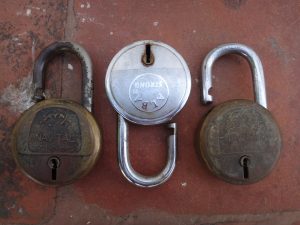
Master Key Systems Explained: How They Work and When to Use One
A full guide to master keying for landlords, HMOs and multi-property owners in South London.
Read guide
How to Find a Trusted Locksmith in the UK (And Avoid the Rogues)
The vetting, credentials and pricing patterns that separate a real locksmith from a scam operation.
Read guide
Night Latch Locks: Are They Secure Enough on Their Own?
Why a Yale-style nightlatch needs BS3621 certification and a mortice partner to protect a London front door.
Read guideDeadlocks Explained: Types, Security Ratings and When Your Door Needs One
3-lever vs 5-lever, BS3621 vs non-BS, and why the insurance gap bites homeowners every winter.
Read guide
What to Do After a Break-In: A Step-by-Step Guide for South London Homeowners
The exact order of calls, paperwork and lock changes from the moment you realise you have been broken into.
Read guide
uPVC Door Problems: The Most Common Faults and What Causes Them
Drop, sag, bind, and gearbox fatigue — the four failure modes of every ageing uPVC door in London.
Read guide Live Now — South London
Still not sure which lock you need?
WhatsApp us a photo, we'll tell you honestly.
No quote over the phone until we have seen your door. No sales pressure. Card or cash accepted. 30-minute response across every postcode in South London, 8am–8pm, 7 days a week.
DBS Checked
Fully Insured
Google Rated 5.0
Since 2015
Live now
Call 07398 533407
Locked out? We can be at your door in 30 minutes.
Locksmith South LondonSouth London · Croydon · CR & SW
Family-run, DBS-checked locksmiths covering South London since 2015. Lockouts, lock changes, uPVC door repairs, smart locks, commercial & insurance work — clear pricing before any job begins.
Office Address81 Hood Close, Croydon, CR0 3SR
8am–8pm Phone07398 533407
WhatsAppMessage us · we reply in <5 min
Emailinfo@locksmithsouthlondon.com
CoverageSW · CR · SE postcodes — South London
Available now
8am–8pm across every South London postcode
30min
Avg response
5.0★
Google rating
10+yrs
Local since 2015
Lock Types
- Euro Cylinder Lock
- Anti-Snap Cylinder
- Anti-Bump Cylinder
- Thumb-Turn Cylinder
- Double Cylinder
- Night Latch
- Mortice Lock
- 5-Lever Mortice
- 3-Lever Mortice
- Mortice Deadlock
- Mortice Sash Lock
Door Locks
Security Locks
- Anti-Snap Locks
- Anti-Bump Locks
- Anti-Pick Locks
- Drill-Resistant Locks
- Insurance-Approved
- British Standard
Smart & Specialist
Window & Garage
Services
- Emergency Locksmith
- Lost House Keys
- Replacement Cost
- uPVC Lock Repair
- Composite Replacement
- Commercial Locksmith
- Master Key Systems
- Key Safe Installation
Resources
Top Guides
- Types of Door Locks
- Best Door Locks UK
- How to Choose a Lock
- Lock Grades Explained
- How Door Locks Work
- After a Break-In
Emergency Locksmith Areas
- Emergency Locksmith Croydon
- Emergency Locksmith South Croydon
- Emergency Locksmith Purley
- Emergency Locksmith Banstead
- Emergency Locksmith Thornton Heath
- Emergency Locksmith New Addington
- Emergency Locksmith Norbury
- Emergency Locksmith Coulsdon
- Emergency Locksmith Kenley
- Emergency Locksmith Caterham
- Emergency Locksmith Sanderstead
- Emergency Locksmith Sutton
- Emergency Locksmith Carshalton
- Emergency Locksmith Wallington
- Emergency Locksmith Mitcham
Where we show up fast
South London is our home turf. 30-minute response promise across these postcodes — call us 8am–8pm, 7 days a week.
View full coverage map →Latest from Locksmith Advice
All guides →
DBS Checked
Fully Insured
5.0 Google Rating
8am–8pm Service
No Call-Out Fee
10+ Years Local
Card · Cash
© 2026 Locksmith South London · All rights reserved.
Payment
Card · Cash
Pre-Booked Lock Change Areas
- Wandsworth
- Battersea
- Clapham
- Streatham
- Peckham
- Putney
- Wimbledon
- Richmond
- Kingston
- Surbiton
- East Dulwich
- West Dulwich
- West Norwood
- Orpington
- Beckenham
- Greenwich
- Blackheath
- Eltham
- Sydenham
- Hither Green
- Crystal Palace
- Banstead
- Purley
- Elephant & Castle
- Cheam
- Chislehurst
- Sidcup
- Bexleyheath
- Pimlico
- Victoria
- Fulham
- Chelsea
- Balham